Silenced by the Court: Why Florida Family Court Gag Orders Are Unconstitutional
How judges across the Sunshine State are issuing sweeping speech bans that appellate courts keep striking down — and why fathers keep paying the price
The First Amendment does not take a vacation when a marriage ends. Yet across Florida's family courts, judges routinely issue gag orders so broad that they would be struck down in any other context — and fathers are disproportionately the ones silenced, threatened with contempt, and forced to choose between speaking the truth and keeping custody of their children. This is not a fringe phenomenon. It is a systemic pattern that has been documented by appellate courts, civil liberties organizations, and legal scholars for decades — and it continues because the cost of fighting back is prohibitive for most families.
A gag order in the context of family litigation is a court order prohibiting one or both parties from making public statements about the case, the other party, or related proceedings. On its face, the concept sounds reasonable. Courts have a legitimate interest in protecting children from being weaponized in parental disputes. But the legal standard for restricting speech is extraordinarily high, and the gap between that standard and what Florida family courts actually issue is vast, consequential, and in many cases unconstitutional on its face.
The U.S. Supreme Court has long held that prior restraints — government orders prohibiting speech before it occurs — are the most constitutionally disfavored form of speech restriction. In Nebraska Press Association v. Stuart (1976), the Court described prior restraints as 'the most serious and the least tolerable infringement on First Amendment rights.' To survive constitutional scrutiny, a prior restraint must be narrowly tailored, supported by specific findings of imminent harm, and limited to speech substantially likely to materially prejudice the proceedings. This is an extraordinarily high bar. Most family court gag orders do not come close to clearing it.
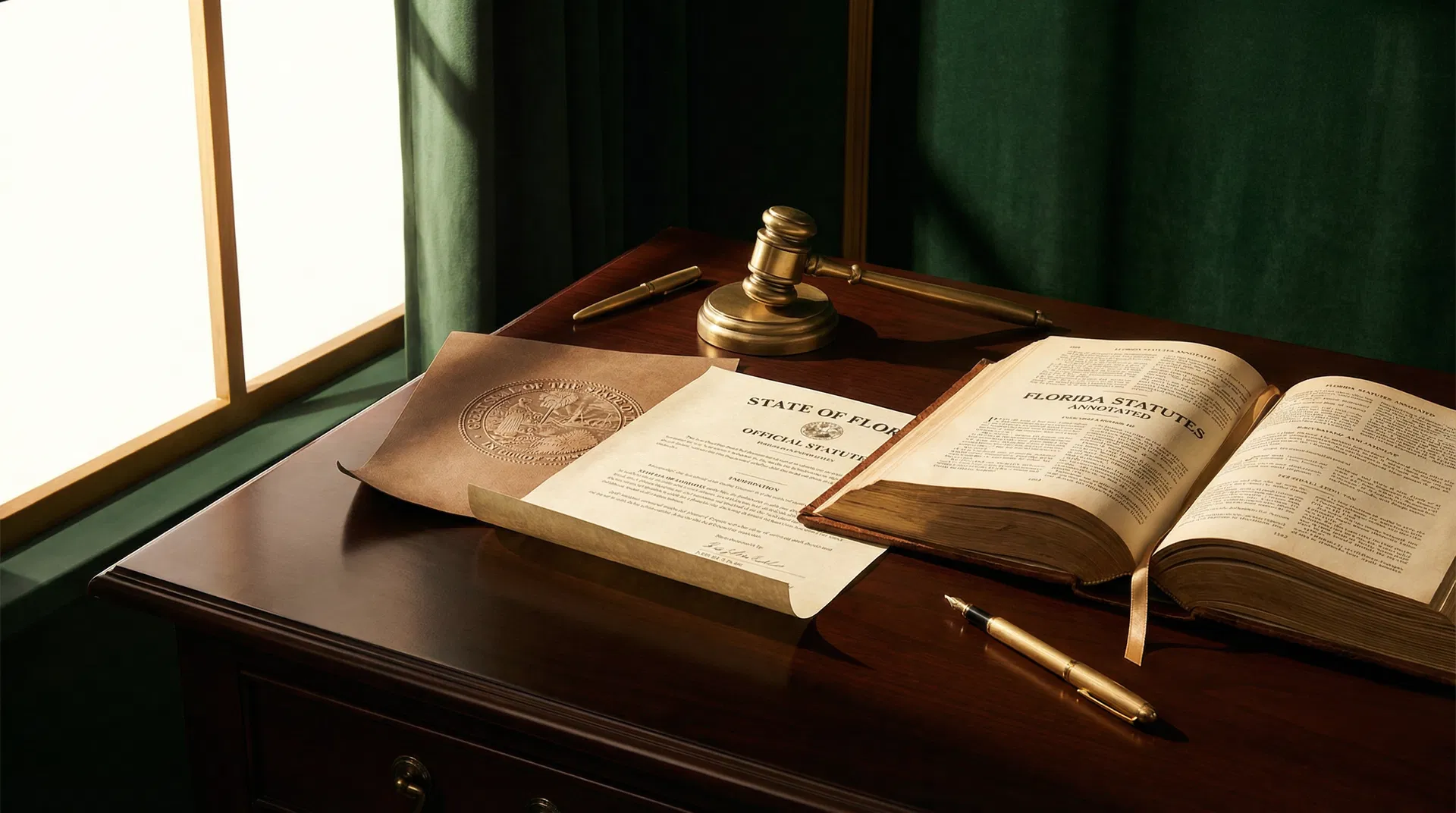
The controlling Florida precedent is Delgado v. Miller, decided by the Third District Court of Appeal in 2020. The case arose from a paternity and custody dispute between Arlene Delgado and Jason Miller. The trial court, adopting a magistrate's recommendation, issued a sweeping order prohibiting both parties from engaging in 'any social media of any nature which comments, directly or indirectly, on the other party's emotional or mental health or personal behavior.' Chief Judge Kevin Emas struck the order down as an unconstitutional prior restraint. The court found that the trial judge had failed to make specific findings of necessity and that the order was 'so overbroad as to render its boundaries indiscernible.' The ruling reaffirmed that while judges have broad discretion to reduce discord in family litigation, there are hard constitutional limits to that discretion.
Prior restraints on speech are the most serious and least tolerable infringement on First Amendment rights. Family court is not exempt.
The problem is that Delgado v. Miller, while controlling law in the Third District, has not stopped the pattern. Family court judges across Florida continue to issue broad social media bans, non-disparagement orders that extend well beyond communications to the child, and retaliatory gag orders issued after a parent attempts to expose judicial misconduct or bias. The threat of contempt — which can result in fines, loss of custody, or incarceration — forces many fathers into compliance with orders that are unconstitutional on their face. The constitutional challenge to the order itself requires appellate litigation that can take years and cost tens of thousands of dollars. In the meantime, the silencing is complete.
Florida Statute § 61.13 does give courts authority to consider disparagement as a factor in custody determinations. Specifically, the statute requires courts to evaluate 'the demonstrated capacity and disposition of each parent to facilitate and encourage a close and continuing parent-child relationship' and 'refraining from disparaging comments about the other parent to the child.' But this is a far cry from authorizing blanket speech bans. The statute addresses behavior toward the child — not a parent's right to speak publicly about systemic injustice in the courts. The conflation of these two categories is the mechanism by which unconstitutional gag orders are generated and sustained.
The distinction matters enormously. A father who posts on social media about his experience with a biased judge is engaging in protected political speech — the most protected category under the First Amendment. A father who tells his child that 'Mommy is crazy' is engaging in behavior that courts may legitimately consider in custody determinations. These are categorically different acts, and the law treats them differently. Family court judges who conflate the two are not protecting children — they are silencing critics of the court system itself, which is precisely the kind of speech the First Amendment was designed to protect.
The ACLU of Florida has successfully challenged family court gag orders on First Amendment grounds on multiple occasions. In 2010, the ACLU secured the reversal of a Miami-Dade Family Court gag order that prevented family members of the 'Joe Cool' murder victims from speaking or writing about the orphaned children. The Third District Court of Appeal reversed the order, reaffirming that prior restraints are presumed unconstitutional and acceptable only in 'exceptional cases' where no less restrictive alternative exists. The court's language was unambiguous: family court is not a First Amendment-free zone.
What makes the current situation particularly troubling is the asymmetry of enforcement. Fathers who violate gag orders — even unconstitutional ones — face immediate contempt proceedings, potential loss of custody, and in some cases incarceration. The constitutional challenge to the order itself requires appellate litigation that can take years and cost tens of thousands of dollars. In the meantime, the silencing is complete. The father cannot speak. The court cannot be criticized. The system protects itself at the expense of the parent who is most likely to expose its failures.
The Gentile v. State Bar (1991) standard, which governs speech restrictions in pending legal proceedings, requires that any restriction be limited to speech 'substantially likely to materially prejudice' the proceedings. This is a high bar that most family court gag orders fail to meet. A father posting on social media about his experience in family court is not substantially likely to materially prejudice his custody case — it is substantially likely to embarrass the judge, which is a different thing entirely. Courts that issue gag orders to protect their own reputations rather than the integrity of the proceedings are abusing their contempt power.
The path forward requires both legal and cultural change. On the legal front, fathers facing unconstitutional gag orders must challenge them immediately through emergency motions and, if necessary, interlocutory appeals. The constitutional standard is clear: broad social media bans and non-disparagement orders that extend beyond direct communications to the child are presumptively unconstitutional prior restraints. On the cultural front, the legal community, the media, and the public must recognize that silencing a parent is not protecting a child — it is protecting a system that has something to hide. GagDads exists to document these cases, amplify these voices, and hold these courts accountable to the Constitution they are sworn to uphold.
Every father who has been silenced by an unconstitutional gag order deserves to know that the law is on his side. The First Amendment is not a technicality. It is the foundational guarantee that makes every other right meaningful. When a family court judge issues a sweeping speech ban without making the specific findings required by law, that judge is not protecting a child — that judge is violating the Constitution. And that violation deserves to be named, documented, and challenged at every level of the legal system until the pattern ends.
Be the first to speak.
This is a space for fathers, advocates, attorneys, and anyone who believes the First Amendment means something. Speak freely. Speak with purpose.
Add Your Voice
No voices yet. The silence ends with yours.
Comments are stored securely and visible to all readers. Submit your full story to the editorial team.