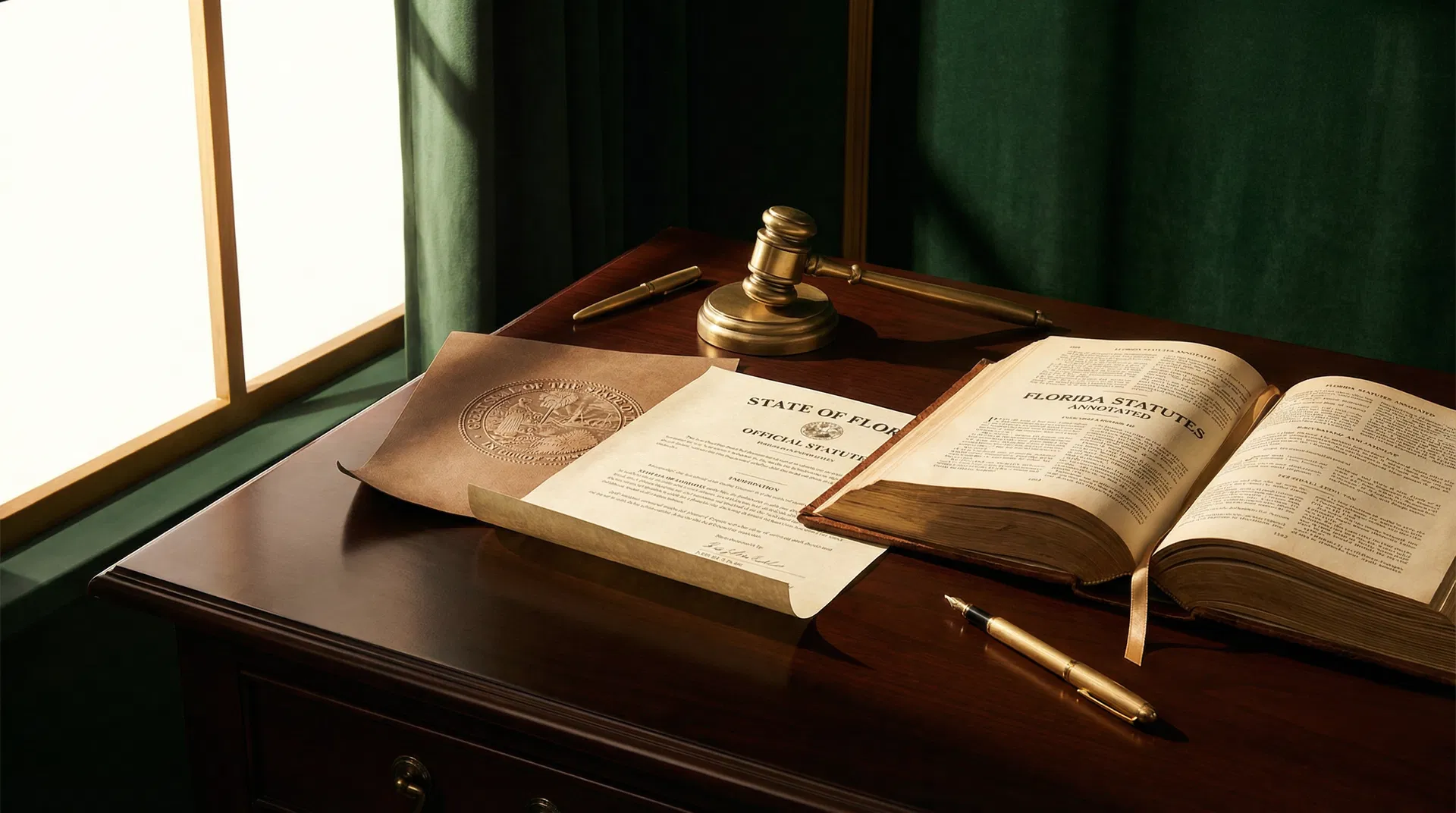
Free Speech in Family Court: The Constitutional Rights You Don't Lose When You Divorce
A comprehensive guide to the First Amendment rights that survive family court proceedings — and how to assert them
Divorce does not suspend the Constitution. Custody litigation does not suspend the Constitution. A family court gag order does not suspend the Constitution. Your First Amendment rights survive family court — and the failure of many fathers to understand this is one of the most consequential legal misunderstandings in American family law. This guide is designed to correct that misunderstanding, to explain the First Amendment rights that apply in family court, and to provide the framework for asserting those rights when they are violated.
The First Amendment to the United States Constitution provides that 'Congress shall make no law... abridging the freedom of speech.' Through the Fourteenth Amendment, this prohibition applies to state governments as well — including state courts. A family court judge is a state actor. A family court order is a state action. When a family court judge issues an order prohibiting a parent from speaking, that order is subject to First Amendment scrutiny. The fact that the order is issued in the context of family litigation does not change this analysis.
The most important First Amendment right in the family court context is the right to speak publicly about your case. This includes the right to post on social media about your experience in family court, the right to speak to journalists about your case, the right to write about your experience in a blog or book, and the right to advocate publicly for family court reform. These are all forms of protected speech — and in many cases, they are forms of political speech, which receives the highest level of constitutional protection.
Political speech is speech about the conduct of government. A parent who speaks publicly about a family court judge's conduct is engaging in political speech. A parent who advocates for family court reform is engaging in political speech. A parent who shares their experience with the family court system to warn other parents is engaging in political speech. The Supreme Court has consistently held that political speech is entitled to the most robust First Amendment protection — and that the government's power to restrict it is at its narrowest.
You do not surrender your constitutional rights at the courthouse door. Not even in family court.
The second important First Amendment right in the family court context is the right to petition the government for redress of grievances. This right, also protected by the First Amendment, includes the right to file complaints against judges, to contact legislators about family court reform, and to participate in public advocacy campaigns. A family court gag order that prohibits a parent from contacting their state representative about family court reform is not just a speech restriction — it is a violation of the right to petition.
The third important First Amendment right in the family court context is the right to association. The First Amendment protects not just individual speech, but the right to associate with others for the purpose of engaging in protected speech. A father who joins a fathers' rights organization, participates in a support group, or contributes to a public advocacy campaign is exercising his First Amendment right to association. A family court order that prohibits a parent from participating in these activities is a violation of the right to association.
The limits of First Amendment protection in family court are real but narrow. Courts may prohibit speech that is directed at the child and that is substantially likely to harm the child's best interests. Courts may prohibit speech that is substantially likely to materially prejudice the proceedings — but only if the court makes specific findings supporting that conclusion. Courts may not prohibit speech simply because it is embarrassing to the court, critical of the judge, or negative about the other party. These are not constitutionally sufficient bases for a prior restraint.
The practical steps for asserting your First Amendment rights in family court begin with understanding what you are and are not permitted to say. You are permitted to speak publicly about your experience in family court. You are permitted to criticize the judge's conduct. You are permitted to advocate for family court reform. You are not permitted to make false statements of fact about the other party that would constitute defamation. You are not permitted to make statements to your child that are designed to alienate the child from the other parent. Understanding these limits — and staying clearly within them — is the foundation of a successful First Amendment strategy in family court.
When a family court issues an order that violates your First Amendment rights, the response must be immediate and aggressive. File a motion to dissolve or modify the order in the trial court, citing the controlling constitutional standards. If the trial court denies the motion, file an interlocutory appeal in the appropriate district court of appeal. Document every instance in which the order has prevented you from exercising your constitutional rights. And continue to speak — within the limits of what the order permits — about your experience, your case, and the system that is trying to silence you.
The First Amendment is not a technicality. It is the foundational guarantee that makes every other right meaningful. Without the right to speak, you cannot advocate for your rights. Without the right to advocate, you cannot change the system. Without the ability to change the system, the injustices of family court will continue indefinitely. The First Amendment is the tool that makes change possible — and every father who has been silenced by an unconstitutional gag order has the right to use it.
GagDads exists to support fathers in asserting their First Amendment rights. We provide the legal framework, the case law, and the community support that fathers need to fight back against unconstitutional speech restrictions. We believe that every father has the right to speak about his experience, advocate for his children, and hold the courts accountable. Contact us at [email protected] if you have been silenced by a family court gag order. We want to hear your story.
Be the first to speak.
This is a space for fathers, advocates, attorneys, and anyone who believes the First Amendment means something. Speak freely. Speak with purpose.
Add Your Voice
No voices yet. The silence ends with yours.
Comments are stored securely and visible to all readers. Submit your full story to the editorial team.